
Sterling Silver vs Gold-Plated vs Stainless Steel: What Actually Lasts
Two rings can look almost identical in a photo and cost — and last — completely differently. The difference is what they are made of. Here is a plain comparison of the three materials you will see most: sterling silver, gold-plated, and stainless steel, and what each one actually does over years of wear.
Sterling silver (925)
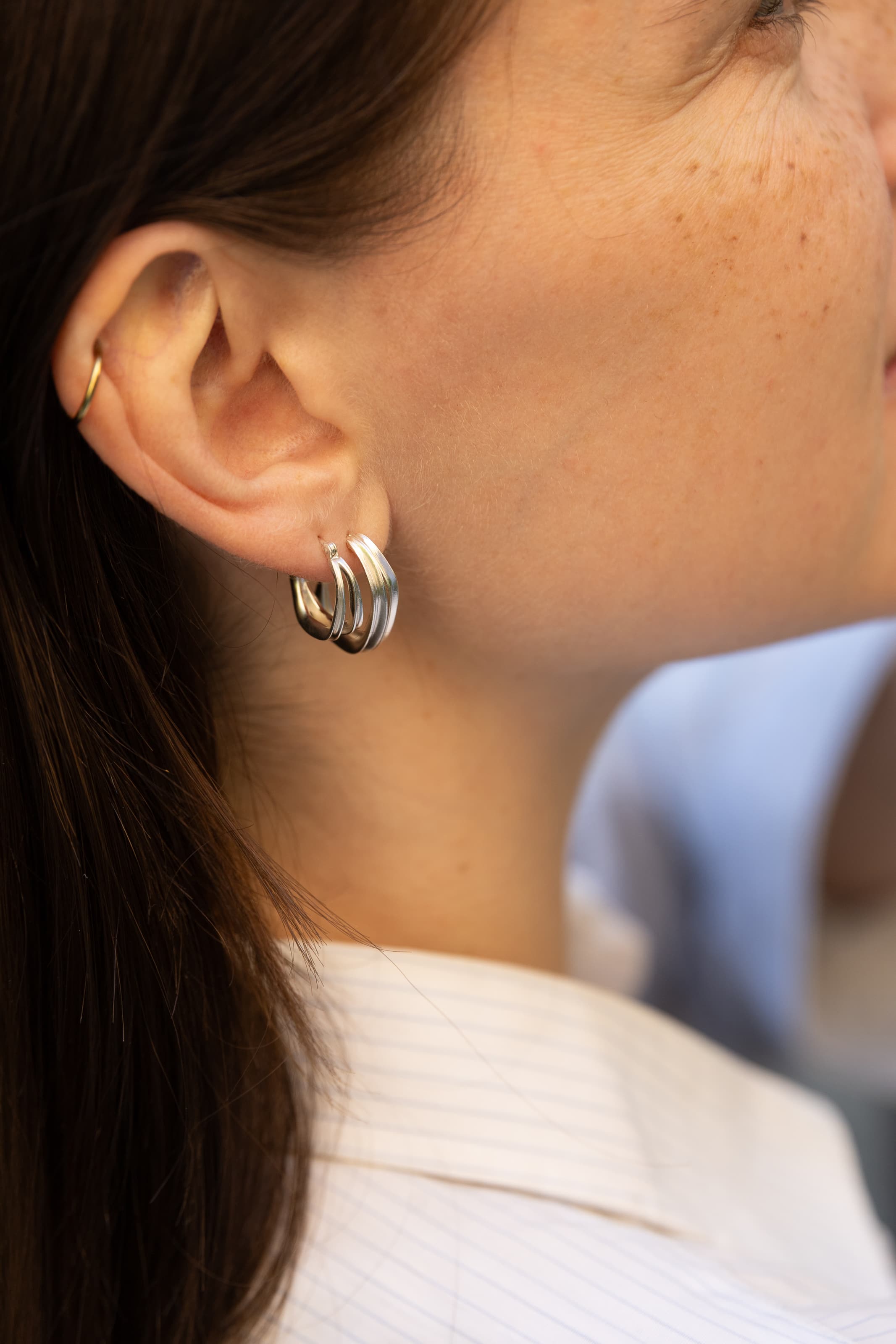
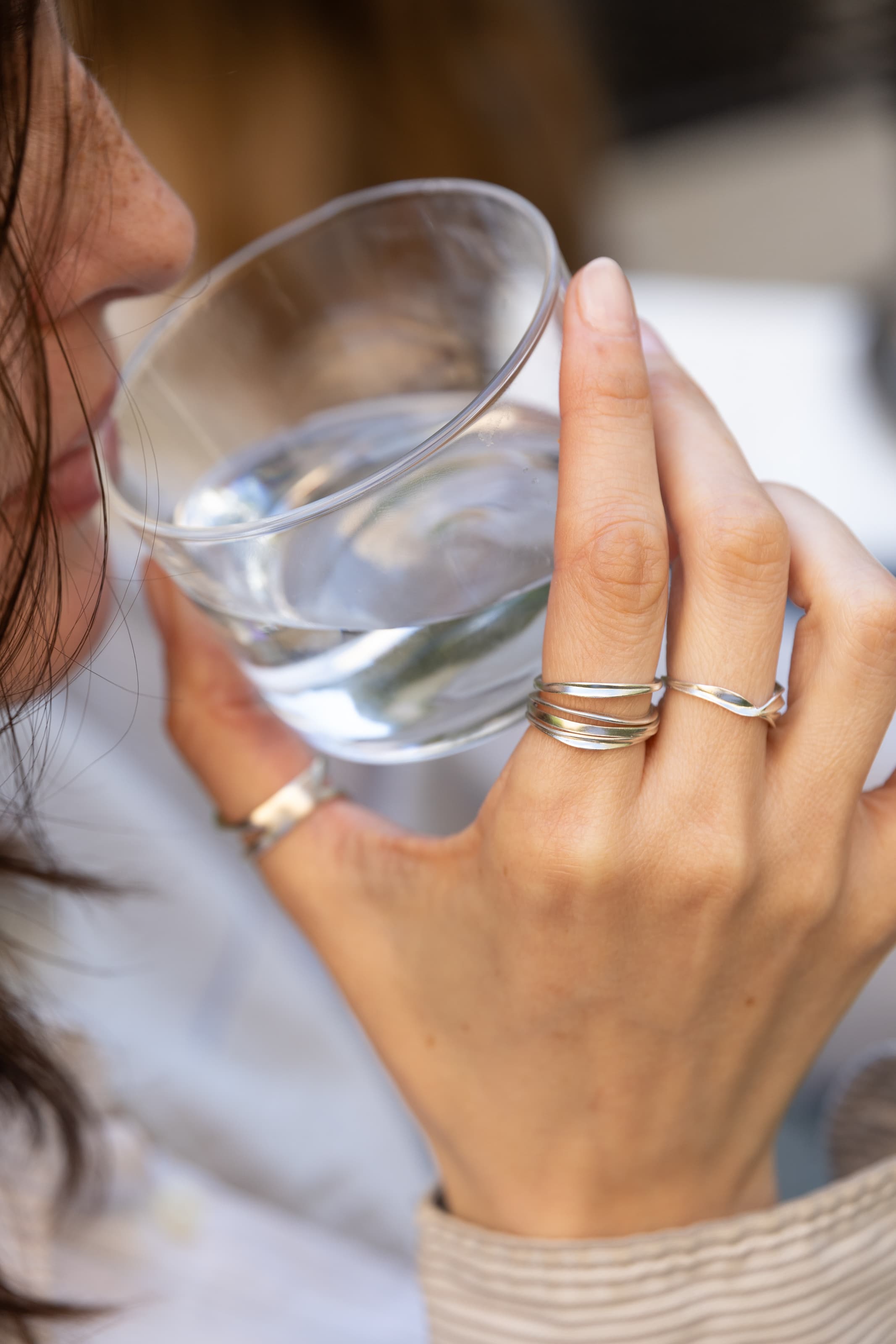
Solid sterling silver is 92.5% silver, usually alloyed with copper. It is solid metal all the way through, so it never wears into a different material. Mine is nickel-free, which keeps it comfortable on sensitive skin. It is soft in colour and light to wear. It will tarnish slowly if left unworn — that is normal for silver, and it cleans off easily — but worn regularly it mostly stays bright on its own. With basic care a good silver piece lasts decades and can be polished back to new. It is the best balance of price, wearability and longevity for everyday jewellery.
Gold-plated
Gold-plated jewellery is a thin layer of gold colour over a cheaper base metal, often brass or nickel. It looks like gold at a fraction of the price, which is the appeal. The catch is that plating is a coating, not the material. It wears off — fastest on rings and earring posts, where there is friction — and when it goes, the base metal shows through and, for many people, starts a skin reaction. Plated pieces are fine as short-lived fashion, but they are not made to last, and they cannot be restored once the plating is gone.
(Worth knowing: gold vermeil is a better version — thicker gold over solid silver rather than brass — but it is still a coating that eventually wears.)
Stainless steel
Surgical-grade stainless steel is very tough and tarnish-resistant, and good-quality steel is low in nickel, so it suits sensitive skin. It is a practical, hard-wearing material. The trade-offs are feel and character: steel is harder, colder and heavier, and it cannot be resized or reworked the way precious metal can. Excellent for durability, less so for something you want to feel soft and personal.
So which lasts?
For longevity, solid metals win — sterling silver and steel both outlast plating by years, because there is no coating to wear away. Between them, silver is the more wearable and workable everyday choice; steel is the more industrial one. Gold-plated will always be the shortest-lived of the three, however good it looks on day one.
How to tell what you are actually buying
- Look for "925" or "sterling." If a piece is only called "silver-tone" or "silver-plated," it is plated, not solid.
- Ask about nickel if your skin reacts. "Nickel-free" is a specific claim; "hypoallergenic" alone is vaguer.
- Check whether it can be repaired or resized. Solid metal can; plated cannot.
Everything I make is solid, nickel-free 925 — meant to be worn every day and kept for years, not replaced every season. If you are choosing something to actually keep, start with the solid silver everyday pieces.